

If you’ve ever spent time on a construction, demolition, or quarry site, you know that time is money. When a project hits a bottleneck because of delayed crushing or sorting, every minute counts—and that’s where attachments like jaw crusher buckets come into play. As a supplier of these heavy-duty excavator attachments, I hear the same question over and over from operators, site managers, and equipment owners: Is a jaw crusher bucket easy to install? The short answer is yes, but with a few critical caveats that can make the difference between a 30-minute installation and a half-day delay. Today, I’m breaking down exactly what goes into installing these buckets, why ease of installation is one of their biggest advantages, and what you need to know to get your unit up and running fast.
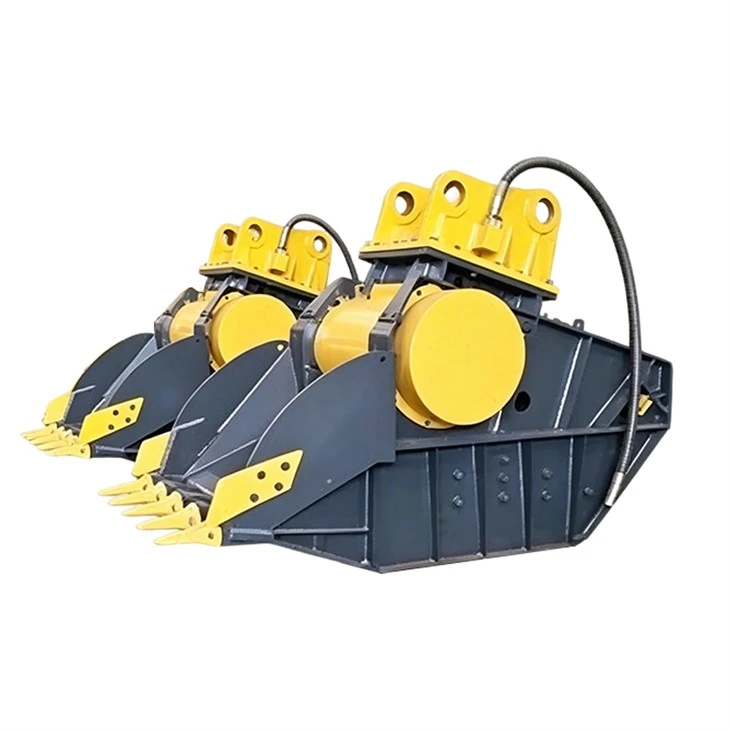
First, let’s set the stage for what a jaw crusher bucket actually is, in case you’re new to the category. Unlike fixed crushing plants that take hours or days to transport and assemble on-site, a jaw crusher bucket is a compact, heavy-duty attachment designed to mount directly to the arm of a standard excavator. It lets you crush on-site materials like concrete, river pebbles, demolition debris, and even small quarry rock without needing a separate, large crusher unit. That portability is one of its biggest selling points, and it starts with the installation process.
When I first started selling these buckets back in 2012, I’ll be honest—we got a handful of calls early on from operators who thought mounting it would be as simple as bolting on a standard digging bucket. That’s not the case, but it’s also not as complicated as some make it sound. The key here is that modern jaw crusher buckets are engineered to integrate with standard excavator quick couplers, which are universal on most mid-sized to large excavators (10 tons and up, typically). Let’s walk through the typical installation step-by-step, because that’s the best way to answer whether it’s easy.
The first thing you need to do before even uncrating your new jaw crusher bucket is confirm that your excavator is compatible. Not all excavators can handle these attachments, and it’s not just about size. You need to check two main specs: the excavator’s lift capacity at the arm end, and its hydraulic flow rate. Jaw crusher buckets run off the excavator’s auxiliary hydraulics, so if your machine doesn’t have high-flow aux options, you might run into issues—though many modern models do, and we offer adapter kits for some older units. This pre-check is non-negotiable, and it’s one of the first things our team goes over with potential buyers, because a quick phone call can save you a day of work later.
Assuming your excavator checks out, the physical installation starts with disconnecting your existing digging bucket. This is where a standard quick coupler shines. Most operators who have used excavators for any length of time can swap out a bucket in 10 to 15 minutes, and swapping to a crusher bucket is nearly identical. You line up the coupler’s pins with the bucket’s mounting ears, engage the quick coupler’s lock, and do a quick visual check to make sure it’s secure. That’s the easy part. The second step is connecting the hydraulic hoses. The jaw crusher bucket has two main hydraulic lines: one to power the opening and closing of the crushing jaws, and another to control the movement of the jaw’s tension system. Some models also have a separate line for a remote control unit, which lets the operator adjust the crusher’s settings from the cab.
This is where I see most first-time installers hit a small snag—getting the hydraulic connections right. The lines are color-coded on most modern buckets, so you can match the high-pressure line to the excavator’s high-pressure port and the return line to the low-pressure port. The key here is to make sure the connections are tight and free of debris; even a small piece of dirt in a hydraulic fitting can cause a leak or prevent the crusher from working properly. We always include a small packet of thread sealant and a set of instructions with every bucket, and our tech support team is on call 24/7 if you run into a problem. On average, swapping from a digging bucket to a crusher bucket takes 30 to 45 minutes for an experienced operator. For someone who’s never done it before, it might take an hour and a half tops. That’s not exactly a lengthy process, especially when you compare it to setting up a stationary crusher, which can take a full day or more.
But here’s the thing: “easy to install” also depends on how well the bucket is designed for interchangeability. Not all jaw crusher buckets are made equal. Early models on the market in the 2000s required custom mounting adapters for each excavator brand, which meant spending extra money and time fabricating parts. At our company, we worked with excavator manufacturers in 2015 to standardize our mounting brackets to fit most major brands: Caterpillar, Komatsu, Volvo, John Deere, and more. We also designed our buckets to work with both pin-on and quick coupler systems, so you don’t have to modify your machine to fit. That’s why when you look at our range—from the versatile Excavator Rock Crusher Bucket to the concrete-specific Concrete Crusher Bucket—each unit is built with installation simplicity front of mind. For example, our Digger Bucket Crusher is lightweight enough to be mounted without extra lifting equipment, even on smaller job sites where crane access is limited.
Another factor that makes installation easier is pre-assembled components. When you buy a crusher bucket from us, it arrives 90% assembled. The only parts you need to attach are the hydraulic hose fittings and the optional remote control. We don’t ship the bucket in pieces to save on freight, which means you don’t have to spend hours bolting on the jaw or the side panels once it arrives. That’s a big difference from some cheaper imported buckets we’ve seen, which come with parts loose and require on-site welding or drilling. Welding on a job site is a hassle, not to mention a safety hazard, so we’ve made it a priority to eliminate that step entirely.
Of course, there are a few situations where installing a jaw crusher bucket is a bit more involved. If you’re mounting it on an excavator under 10 tons, you might need to use a smaller, specialized bucket, and the hydraulic connections might be a bit tighter. But even then, it’s still far simpler than setting up a stationary crusher. We also recommend that if you’re going to be using the bucket on a new job site, you do a quick test run before jumping into heavy production. That means running the crusher empty for a minute or two to make sure the jaws are moving smoothly, checking for any hydraulic leaks, and verifying that the remote control is working (if you have one). This test run takes about five minutes, and it can save you from dealing with a problem once you’ve got a load of concrete or river pebbles to crush.
I’ve had customers tell me they installed our jaw crusher bucket on their lunch break. That’s not an exaggeration, and it’s one of the reasons these attachments have become so popular in the industry. When you’re working on a project where you need to process materials on-site—say, demolishing an old warehouse and turning the concrete slabs into reusable aggregate for road base—you don’t want to wait a week for a portable crusher to show up. The ease of installing a crusher bucket means you can unbox it, mount it in less than an hour, and start crushing that same afternoon. That level of flexibility is game-changing for small to mid-sized contractors who don’t have the budget for a fleet of heavy crushing equipment.
Let’s talk about what happens after installation, too, because that’s part of the overall experience. Once your bucket is mounted, using it is straightforward, but regular maintenance can make future installations (if you swap it back and forth with a digging bucket) even easier. We recommend flushing the hydraulic lines after each use to remove debris, and lubricating the jaw’s pivot points every 50 working hours. Keeping the fittings clean and the pins greased means that next time you swap back from a concrete crusher bucket to a digging bucket, you won’t have to fight with stuck pins or leaky hoses. It’s a small step, but it makes a big difference in long-term ease of use.
Now, I should also address a common misconception: people think because it’s called a “jaw crusher bucket,” it’s just as complex as a full-sized jaw crusher. That’s not true. The crushing mechanism in these buckets is simplified but durable, designed to handle the rough conditions of job sites without requiring a team of mechanics to maintain or install it. Our High-efficiency Crushing Bucket for Excavators, for example, has a self-lubricating jaw system that reduces the need for frequent servicing, which in turn makes any necessary part replacements or re-installations faster and easier.
I want to be transparent here: there is no such thing as an “impossible” installation, but there are poor choices that can make the process way harder than it needs to be. For instance, buying a cheap, off-brand crusher bucket that doesn’t have standard mounting brackets or color-coded hydraulic lines will lead to frustration. You’ll have to spend hours fabricating adapters, matching hoses, and troubleshooting connections that should be plug-and-play. That’s why we always advise customers to buy from a reputable supplier that designs their attachments with ease of installation as a core feature. Our River Pebble Crusher Bucket, for example, is built specifically for the heavy-duty job of crushing hard river rock, and we’ve worked for years to make sure it fits on most standard excavators without any custom work.
Over the past decade, we’ve sold thousands of these crusher buckets to contractors, quarry operators, and demolition teams across the country. I’ve walked side by side with operators as they unboxed their first bucket, and I can tell you that 9 times out of 10, they’re surprised at how simple the installation is. The only time we’ve had delays is when a customer didn’t check their excavator’s hydraulic flow ahead of time, or tried to use a bucket designed for a larger excavator on a smaller machine. That’s why we make compatibility checks part of our sales process—we’ll ask for your excavator model, lift capacity, and hydraulic specs before you even place an order, so you know exactly what you’re getting into.
At the end of the day, the ease of installing a jaw crusher bucket is one of its biggest advantages over traditional crushing equipment. It’s portable, interchangeable, and designed to work with the tools most operators already have on-site. You don’t need a dedicated crew to install it, you don’t need special welding equipment, and you can have it up and running in less than two hours from the time you uncrated it. That’s why more and more teams are ditching the stationary crushers and switching to crusher buckets—because they save time, money, and hassle.

If you’re ready to learn more about our range of crusher buckets, or you have questions about installing one on your excavator, we’re here to help. Our team has years of experience working with contractors of all sizes, and we can walk you through every step of the process, from compatibility checks to post-installation maintenance. Whether you need a bucket for crushing concrete on a demolition site, river pebbles for a landscaping project, or rock for a quarry, we’ve got a solution that’s easy to install and built to last.
References
- Construction Equipment Association. (2022). Excavator Attachment Compatibility and Installation Best Practices. Retrieved from constructionequipmentassociation.org
- Global Mining and Demolition Association. (2021). On-Site Crushing Efficiency: A Guide to Jaw Crusher Buckets. Retrieved from gmda.org
- Hydraulic Industry Standards Board. (2020). Color-Coded Hydraulic Fitting Guidelines for Mobile Construction Equipment. Retrieved from hydraulicstandards.org
- Excavator Operator Safety Institute. (2023). Safe Installation and Use of Attachment Equipment. Retrieved from operatorsafetyinstitute.org
- National Aggregates Association. (2022). Portable Crushing Solutions for Small to Mid-Sized Projects. Retrieved from aggregates.org